Behind the Scenes
We are the MFA class of 2020, nine graduate students studying Information and Experience Design at Northeastern University’s College of Arts, Media + Design. We began our last semester together planning an exhibition to showcase our final thesis projects, but finished the semester individually, scattered across the country due to the COVID–19 pandemic.
Our show was titled, “UNFOLDING”. Our topics and approaches varied greatly, but each of our MFA thesis projects reflect the work of a student who picked a problem and used design to thoughtfully explore its complexities. We unfolded issues to reveal ideas that had previously been unclear.
In March 2020, the pandemic forced Northeastern (and universities around the world) to transfer all programs online. Suddenly, a physical MFA exhibition was out of the question. And somehow, the theme of UNFOLDING seemed more appropriate than ever for our work.
The word UNFOLDING does not only imply revealing and understanding something that was hidden. UNFOLDING reminds us that we are in a state where many things are still hidden and unknown. The early days of the COVID-19 pandemic have been characterized by minute-to-minute updates. Decisions become paralyzing. Planning is ongoing, exhausting, and ever-changing. As designers, we have trained ourselves to embrace uncertainty. Yet the pandemic is pitting us against enormous uncertainty at a structural level. How do you plan for the future when you have no idea what that future looks like?
This website showcases our thesis work, but it is also a space to share artifacts from the exhibition that never happened. We coordinated this online exhibit from home offices and bedrooms, designing with children running around and fighting noise levels with roommates on conference calls. Our situation is imperfect, but we are committed to sharing our work.
We are grateful for our experience at Northeastern.
We mourn the connections and experiences that were cut short.
We persist in the present.
We hope for better things to unfold.
Taste in Translation
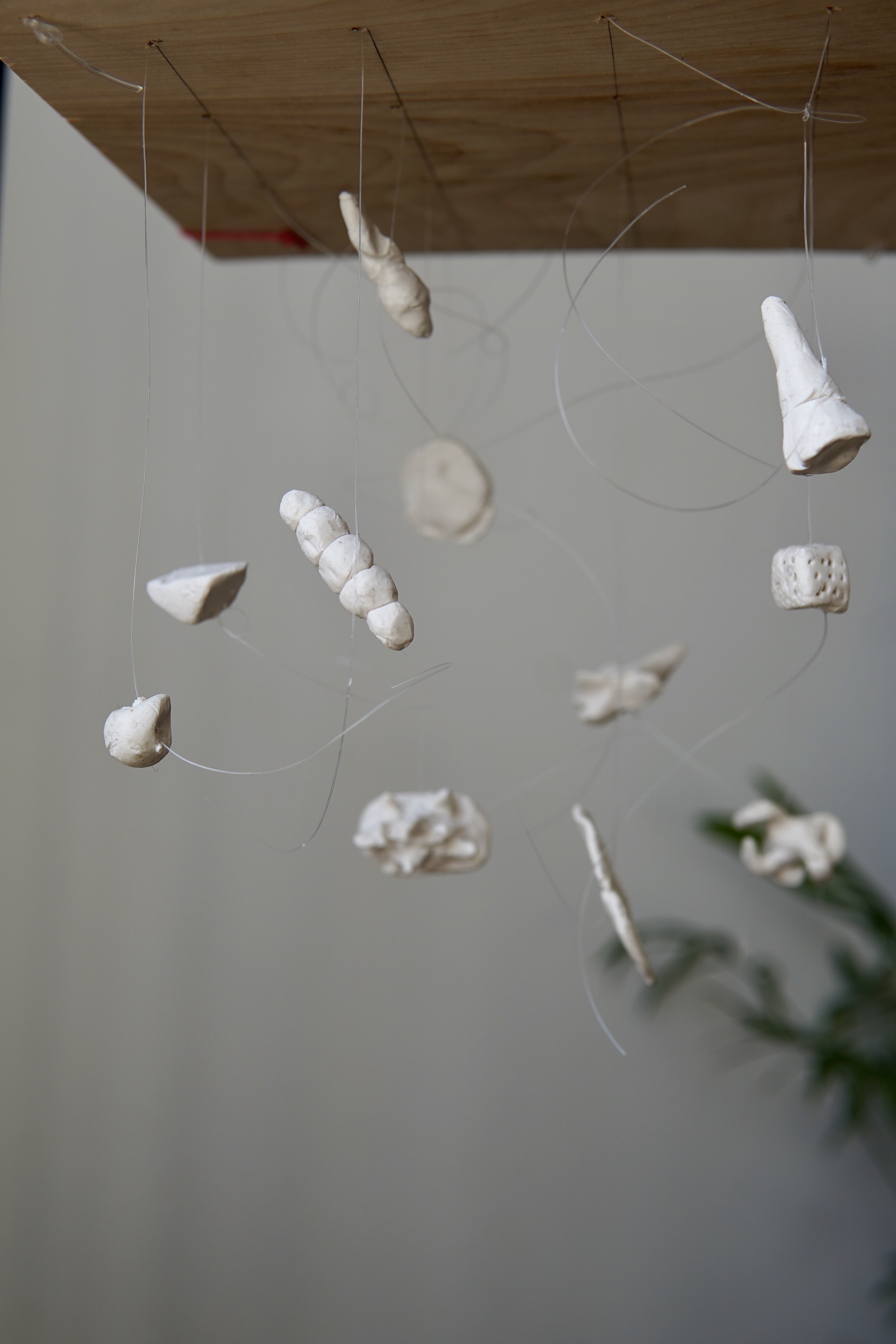
The way I planned out for the physical exhibition was to have a corner of the gallery as a simulated restaurant. People will be able to see my physical prototypes of taste sculptures others have made, and will be presented with food for tasting as part of a participatory research workshop that allows people to come up with their ways of representing sensory information. The sculpture prototypes are made with soft clay and the translucent acrylic sheets were intended for laser cutting to show layers of taste (which didn’t happen due to the COVID shut-down). An additional plan is to have big menus presented on walls, what allows my mobile app to project forms in augmented reality.
A Dancer’s Trace
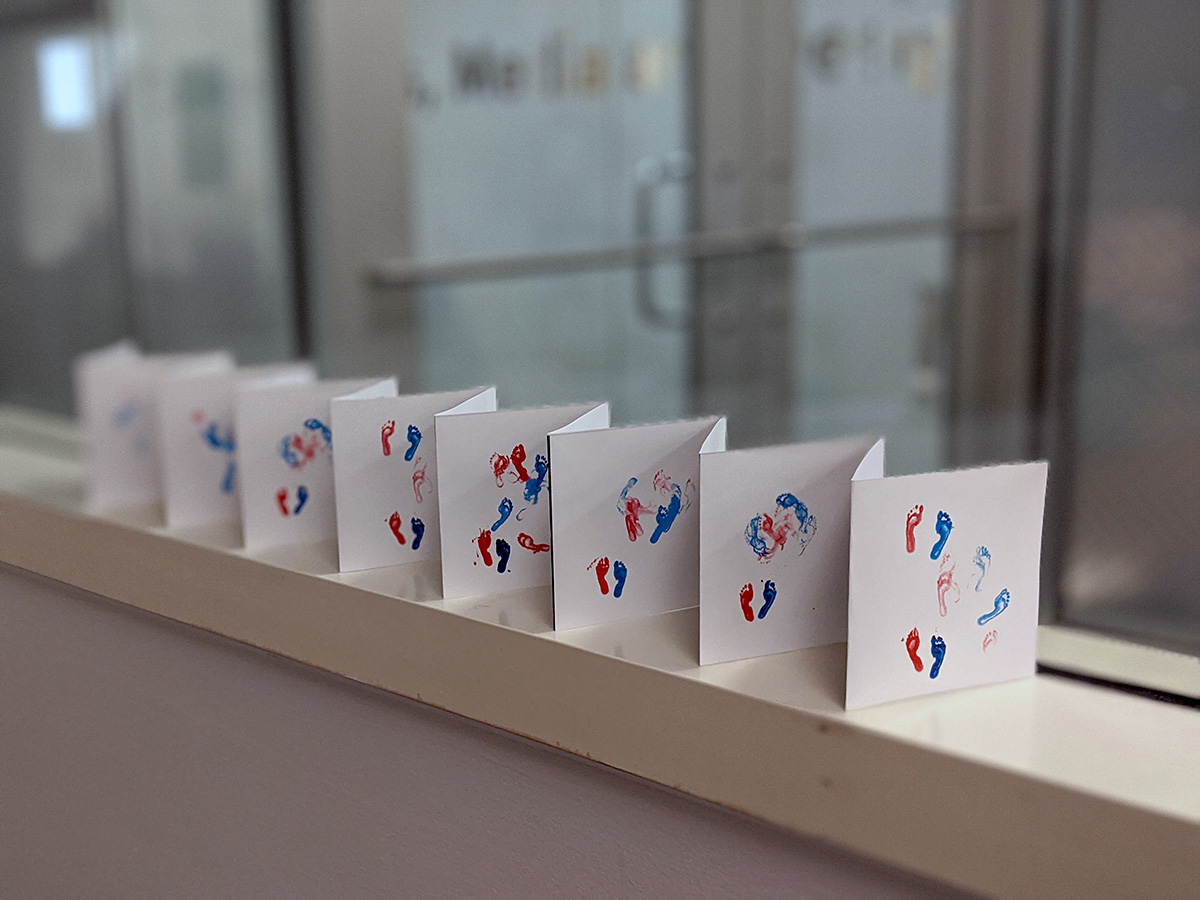
The physical exhibition for me was a chance to showcase one of the visual traces from light painting of Kathak dance as the central piece. I wanted to supplement this central piece with a video, which contained the animated traces of the dance composition. The two themes driving the central piece were—first, how to show the whole performance and second, how to show the temporality in the movement through the traces. Even though the physical exhibition didn’t happen, it gave me a chance to experiment and iterate with physical prototypes to quickly verify what works and what doesn’t in a physical space.
Facilitating Collaboration and Trust in Multicultural Teams
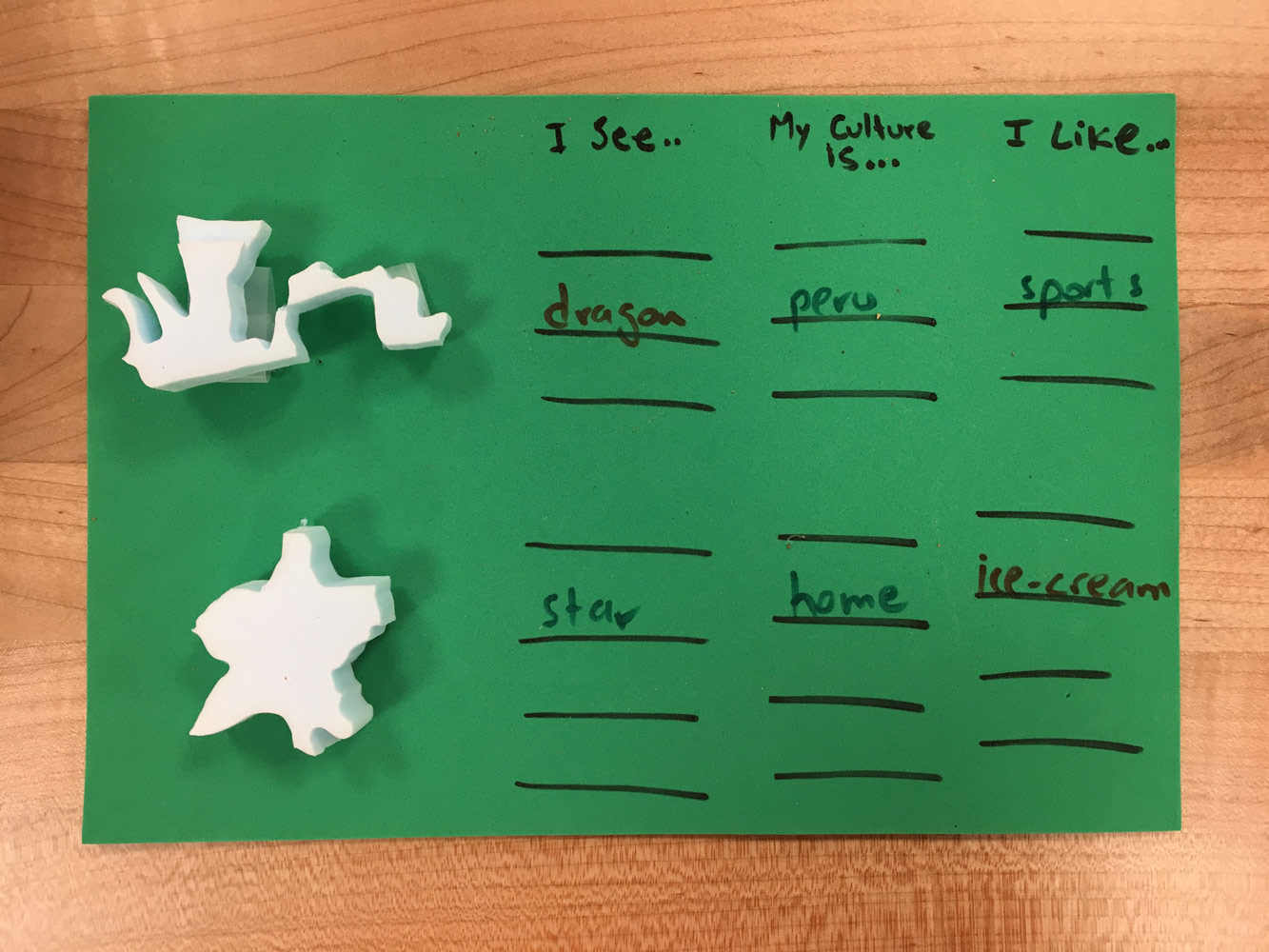
My goal was to engage participants to think about cultural diversity and to experience building common ground with evocative objects, placed in installations that provoke intercultural conversations by exposing commonalities and differences in perspectives. I hoped for participants to leave the exhibition reflecting on the issue and being aware of their own cultural sensitivity willing to approach future cultural interactions with a new point of view.
Enriching Gifts
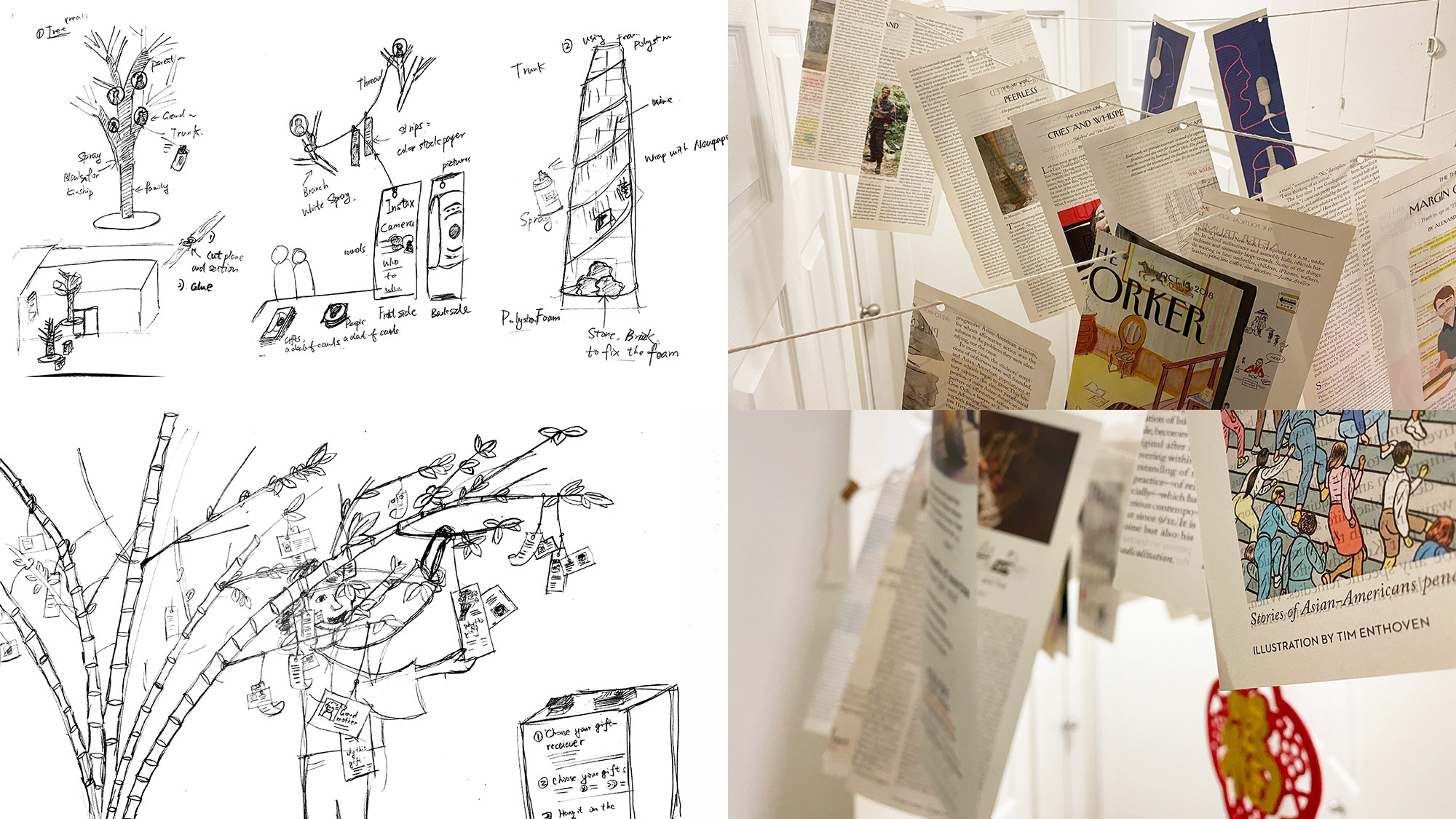
Inspired by Japanese wishing strips in the “Star Festival” and Chinese fortune stick at the temple, I decided to show the gift data as gift strips hung on an abstract tree and ask the audience together to add their gift samples. I want to express through this participatory exhibition that as people reciprocate gifts more often, their relationships become more robust.
Visualizing Group Therapy
I am a person who loves working with my hands, but much of the design work for my thesis is digital. I wanted my portion of the exhibit to bring a tactile element to digital design. Hand illustrations would make therapists and patients feel more human, and “flip boards” on the wall would allow visitors to interact with the space while learning about session dynamics. I also planned to display many of my early prototype sketches, as a way of showing that even crisp, polished design products are the result of messy and playful first experiments.
Breathing Injustice
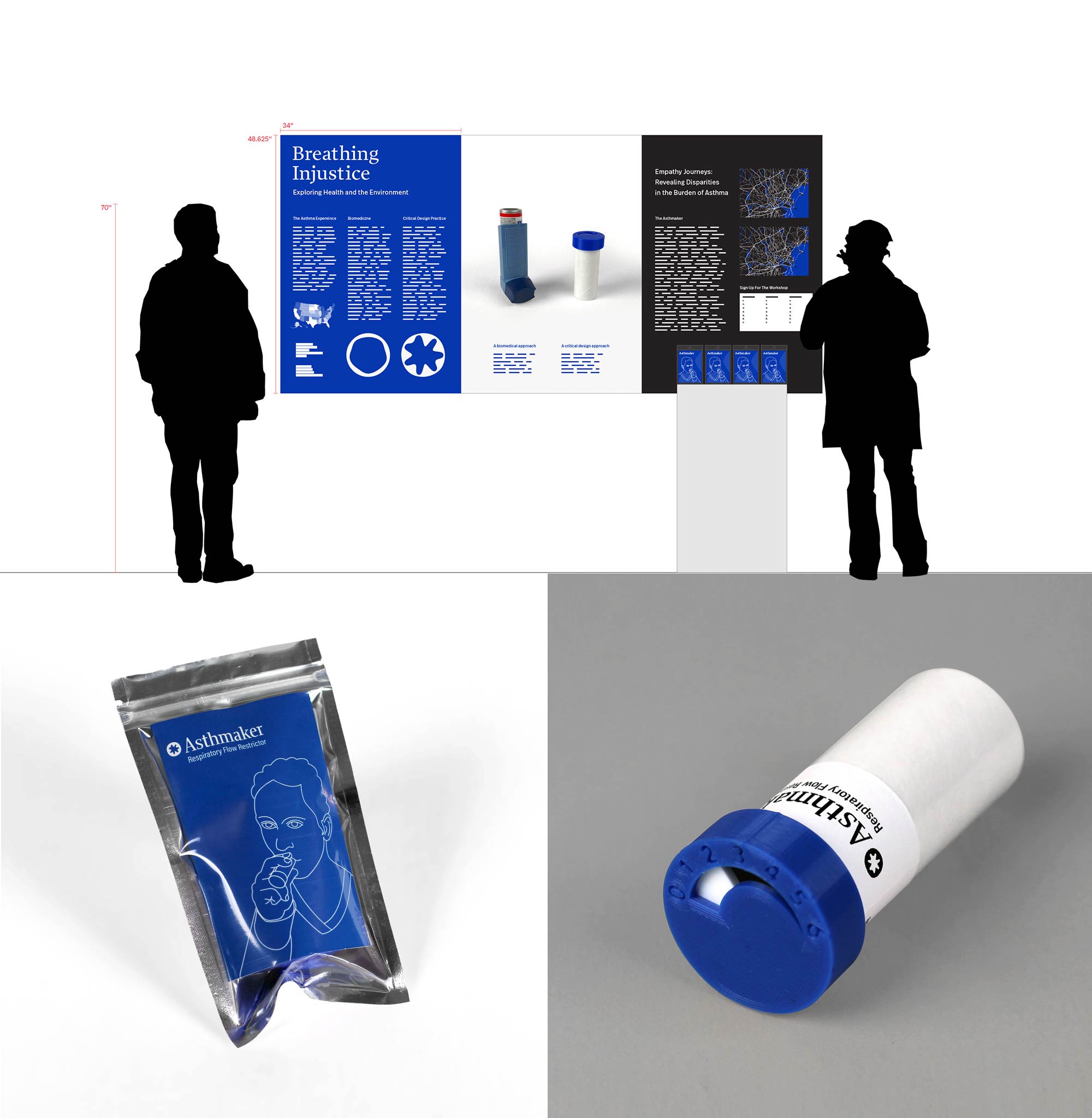
My exhibit would also have a sign-up form for people to join one of two scheduled workshops that would occur in the gallery space at off-peak times.
Mobility Patterns of Boston Workers
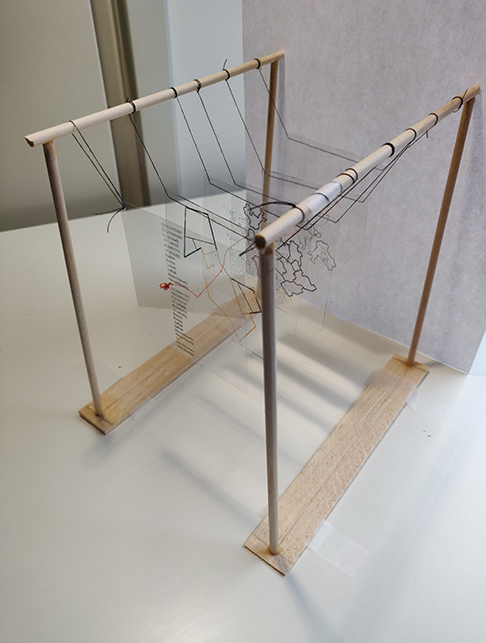
Initially, it was designed to be a poster-size installation of map layers, hanging from the ceiling. Viewers can explore it from far away, also go closer to read more. Because of the COVID-19 situation, I developed this exhibition piece into a smaller size, which can work and install it at home. Also, I developed an interactive feature on the webpage to view the project on-line, which is clicking or dragging the image to see a 360-degree rotate view of the project.
Designing For Persuasion
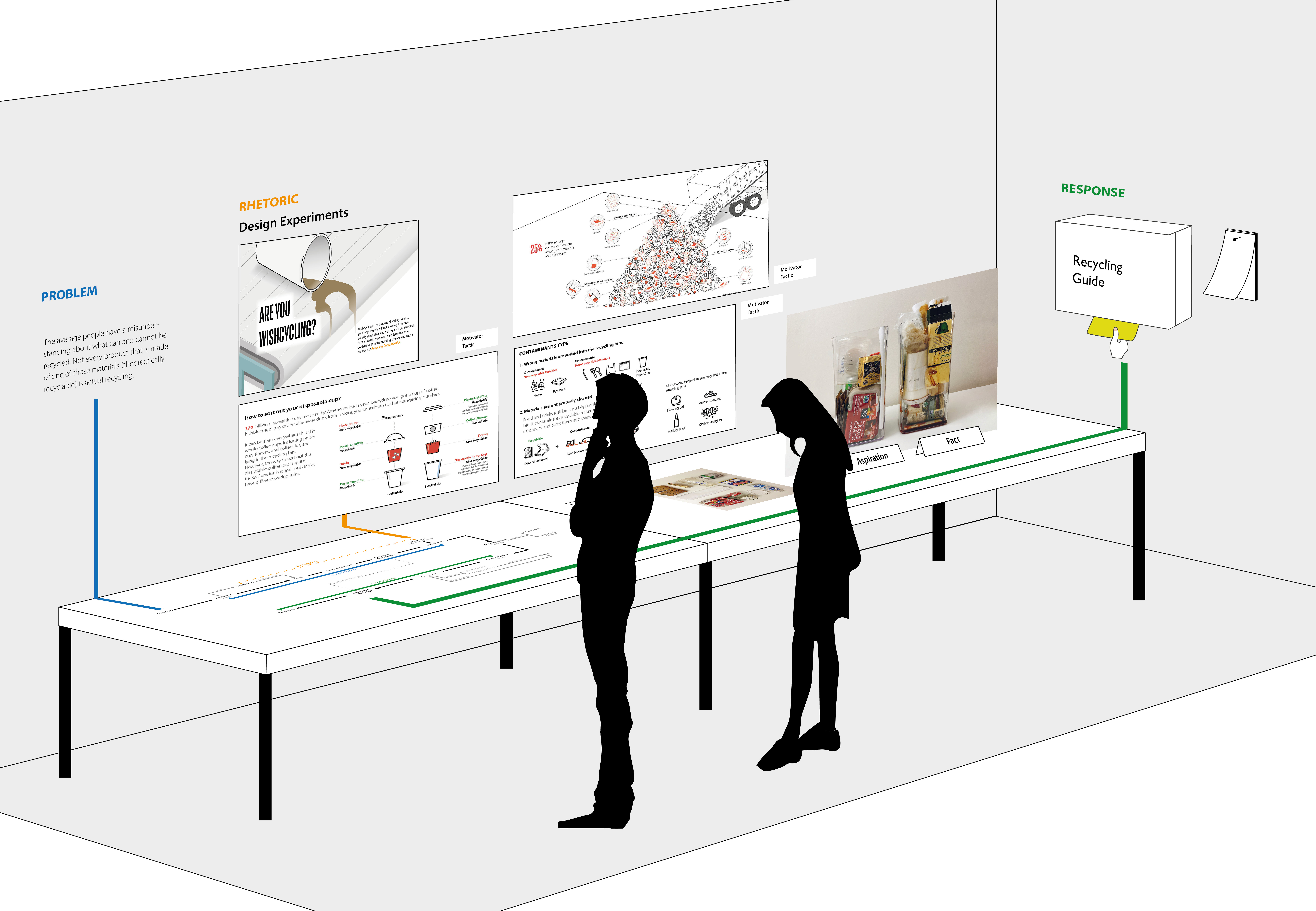
Information design can help people sift through the blizzard of information they encounter every day to identify relevant facts, to weigh the pros and cons, and to make further tough, but reciprocal decisions, especially on social issues. Through connecting the theoretical framework and practical projects, this exhibition shows the practical use of rhetorical motivators and tactics in information design by addressing recycling contamination issues. It aims to engage people in the subject and persuade them to take the initiative to recycle correctly to avoid contamination.
Family Portrait
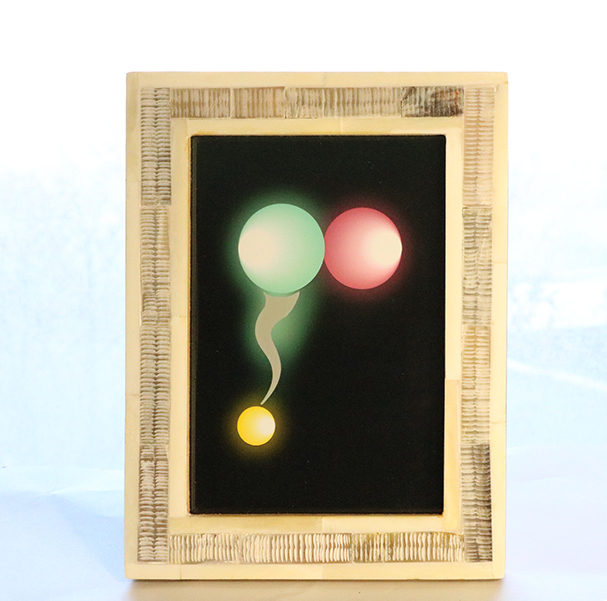
Census data could be a resource not just used by statisticians, demographers but also by designers whose work enables public access to the unexpected or unaware aspects to help the public understand themselves. This thesis explores visual languages to represent individuals and internal relationships within the family. Through abstract visual representations, contextualizing data brings these representations back to the actual families.